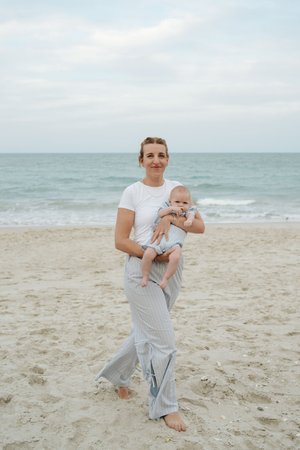
Canada Approved a Pill for Postpartum Depression
Here’s What That Means for Parents Like Me
Written by Rebecca Tate
Health Canada has officially approved Zurzuvae (zuranolone), the first oral medication designed specifically to treat postpartum depression. On paper, it’s a clinical milestone, one that researchers, advocates, and exhausted new moms have been waiting years for. But for those of us who have lived inside postpartum depression (PPD) or postpartum anxiety (PPA), this moment feels much more personal.
For me, it’s validation.
Postpartum mental health has existed quietly in conversation between new mothers for centuries, yet only recently has it become a broader, more present, conversation. Since I became a mother in 2022, the conversation has existed in-person and on social media, yet despite the awareness, it was still quietly minimized. When I struggled after the birth of my first, I didn’t get one neatly wrapped-in-a-bow diagnosis. “It's just your hormones,” “it’s normal, “you’re just tired.” All things that were true, but I felt there was more going on. I would feel a panic that hit at sunset, chest-tightening anxiety, and intrusive thoughts I was too ashamed to say out loud. I knew something was wrong, but the system felt slow, fragmented, and unprepared to support me. I was handed coping tools, like talk therapy, and it took way too long for me to see someone who could help me further.
“To me, this moment represents a shift in culture, an advancement in science and a recognition of the compassion that somehow got lost along the way.”
Seeing a medication built exactly for this chapter of life feels like someone finally saying out loud what I swear I have known all along: PPD/PPA are real, and you shouldn’t have to suffer alone. It isn’t just hormones. It isn’t a lack of gratitude (or a lack of sleep). It is a real, biological condition deserving of targeted treatment.
And what I’ve learned? This pill is different. Unlike traditional antidepressants that can take six to eight weeks to help, Zurzuvae is taken for just 14 days, with some trial participants noticing improvements in mood within the first few days. For any parent who has struggled to function while waiting for slower medications to take effect (or waiting to get in to see a doctor in the first place), that speed is not just convenient. It’s potentially life-changing - especially in the thick of the postpartum period for moms.





Photos by Canadian Photographer @acrewoodcs
As a cautiously optimistic individual, I know that a pill can’t replace therapy, supportive care or your “village”. It can’t shorten the waitlists that seem to be growing each year. And it can’t magically make breastfeeding easier or solve the invisible pressure that tells new moms they have to handle everything alone. It won’t fix a healthcare system where many moms feel rushed, dismissed, or told to “keep an eye on it” when they’re already falling apart while trying to figure out their new identity as “mama”.
It also won’t reach everyone. Right now, Zurzuvae is approved for “moderate to severe PPD”, which means many parents with PPA (like me) or milder-but-still-debilitating symptoms might not qualify, even though their suffering is just as real. And questions still remain about breastfeeding safety, long-term data, and whether the medication will be affordable or covered widely via our healthcare system.
But this approval still marks something huge: a public acknowledgment that postpartum mental health deserves the same seriousness as any other medical condition. For decades, the burden has been placed quietly and unfairly, on parents to push through and just survive. Now, for the first time, we’re seeing treatment designed around the biology of postpartum, not simply borrowed from general psychiatry.
To me, this moment represents a shift in culture, an advancement in science and a recognition of the compassion that somehow got lost along the way. My hope is that this is only the beginning and that alongside medication, we see expanded therapy access, realistic postpartum care plans, better screening, support for ALL parents (especially new ones), and fewer barriers to saying “I need help.”
Because PPD and PPA don’t make you a bad parent. They simply make you a person going through something that finally has the national attention it deserves. And for those of us who have lived it, that recognition alone is a continuation of the healing we’ve been working on.