I Stopped Bringing My Culture to School, Here’s What Happened Next
Written by Diana Bishara
Growing up in Canada as a new immigrant from Egypt, I learned early to hide parts of my culture in order to fit in. Food became one of those things I quietly left behind. This is the story of how I moved from embarrassment to reconnection, and how a simple dish—Ful medames—helped me rediscover pride in where I come from while living in Canada.
It never took too long before someone said, “Ew, what’s that smell?”
The smell of garlic, cumin, and tahini—my favourite.
I was in grade two, a new immigrant to Canada from Egypt. Lunchtime was usually my favourite part of the day, but that day felt different. I was starving, and my mom had packed something I loved: Ful medames—warm, savoury fava beans dressed with olive oil, garlic, and lemon.
I opened my container with one hand, a piece of pita in the other, ready to scoop. My mouth was already watering.
“Ew, what’s that smell?”
“That looks like poop! Gross—she’s eating poop!”
I froze.
My face burned as laughter spread around me. I dropped my pita into the container and quickly shut the lid, pretending to laugh along like it didn’t bother me. Like I wasn’t embarrassed. Like I wasn’t hurt.
That day, I didn’t eat my lunch.
That night, I went home and found my mom in the kitchen.
“Mom… tomorrow for lunch, can I just have a sandwich?”
Kids learn fast, and I was no different. It didn’t take long for me to figure out what was considered “normal” at school—and Egyptian food, apparently, wasn’t.
At home, nothing changed. My mom continued to cook the meals she loved—kofta, spiced and grilled meat; crispy fried fish; and koshary, a comforting mix of rice, lentils, pasta, and tomato sauce. Meals she was proud of. Meals that brought our family together.
And I loved them. I couldn’t not love them—it felt like they were part of me.
But at school, the desire to fit in quickly became louder than that pride. It was already hard enough getting through the day without being picked on—for my curly hair, my hairy arms, for not looking like everyone else. I didn’t need my lunch to make me stand out even more.
So I started paying attention. What other kids brought. What they ate. What didn’t get comments.
And slowly, without really questioning it, I began to change.
I straightened my hair. I avoided bringing foods that might draw attention. I did whatever I could to blend in.
I never stopped to ask why any of it was considered “weird.” I just learned to leave parts of myself at home.
I stopped bringing my culture to school for most of high school.
But things started to shift after that. I got a part-time job, started university, got my driver’s license—it felt like stepping into a version of Canada I hadn’t really seen before.
For the first time, I began to notice just how diverse it was. There were people like me, and people completely different from me—and no one seemed to be hiding it.
Between campus and work, I found myself surrounded by people from all kinds of backgrounds—Lebanese, Filipino, Haitian, Chinese. What stood out to me wasn’t just the differences, but how comfortable everyone seemed in them.
They spoke about their cultures with pride. They brought their food without hesitation. They didn’t shrink themselves to fit in.
I remember going over to friends’ houses and trying meals their moms had cooked—dishes I had never had before, but that felt familiar in a different way. Sitting at those tables made me realize what I had been missing.
And what surprised me most was how interested they were in me—where I was from, the language I spoke, the food I grew up with.
No one saw it as strange.
No one thought it was something to hide.
They were celebrating the very things I had spent years trying to avoid.
Something in me started to shift. No one was hiding where they came from or trying to make themselves smaller—they were just… proud. And slowly, I realized how much I had been holding back.
So I started opening up too.
At first, it was small things—talking more about where I was from, sharing parts of my background instead of brushing them off. Giving people insight into Egypt, my culture, and what growing up in my home was like.
And then I started talking about food.
I remember feeling nervous the first time. I wasn’t sure how it would land. I told them about my mom’s cooking, and eventually mentioned our national dish—Ful medames, a simple mashed fava bean dish eaten in many Egyptian homes.
Even saying it out loud made me self-conscious.
My face felt warm as I explained it, half expecting confusion.
But instead, they were curious.
“That actually sounds really good,” they said. “You should make it for us sometime.”
At that point in my life, I knew I loved cooking, but I hadn’t really taken ownership of food from my own background. It was something I associated with home, with my mom’s kitchen, not something I had fully made my own.
But something about that moment stayed with me.
The idea that my friends weren’t just being polite—they were genuinely interested—made me want to share more. So I did something I had never really done before. I invited them over for an Egyptian brunch.
I wanted it to feel simple, warm, and real. At the center of it was Ful medames—the same dish I had once been embarrassed to bring to school.
This time, I wasn’t hiding it. I was making it on purpose, for people who wanted to try it.
These days, I find myself cooking more of my own culture again, along with exploring other cuisines I’ve discovered along the way. What once felt distant has become something I genuinely enjoy sharing.
There’s something about sitting around a table in Canada that makes that possible. Growing up here, I didn’t always understand it, but now I see it differently. Canada is one of the few places where you can be surrounded by so many cultures at once—where food, stories, and traditions are constantly exchanged if you’re open to them.
And I think that openness has become one of my favourite parts of cooking.
It’s no longer about choosing between where I came from and where I am. It’s about letting them exist alongside each other.
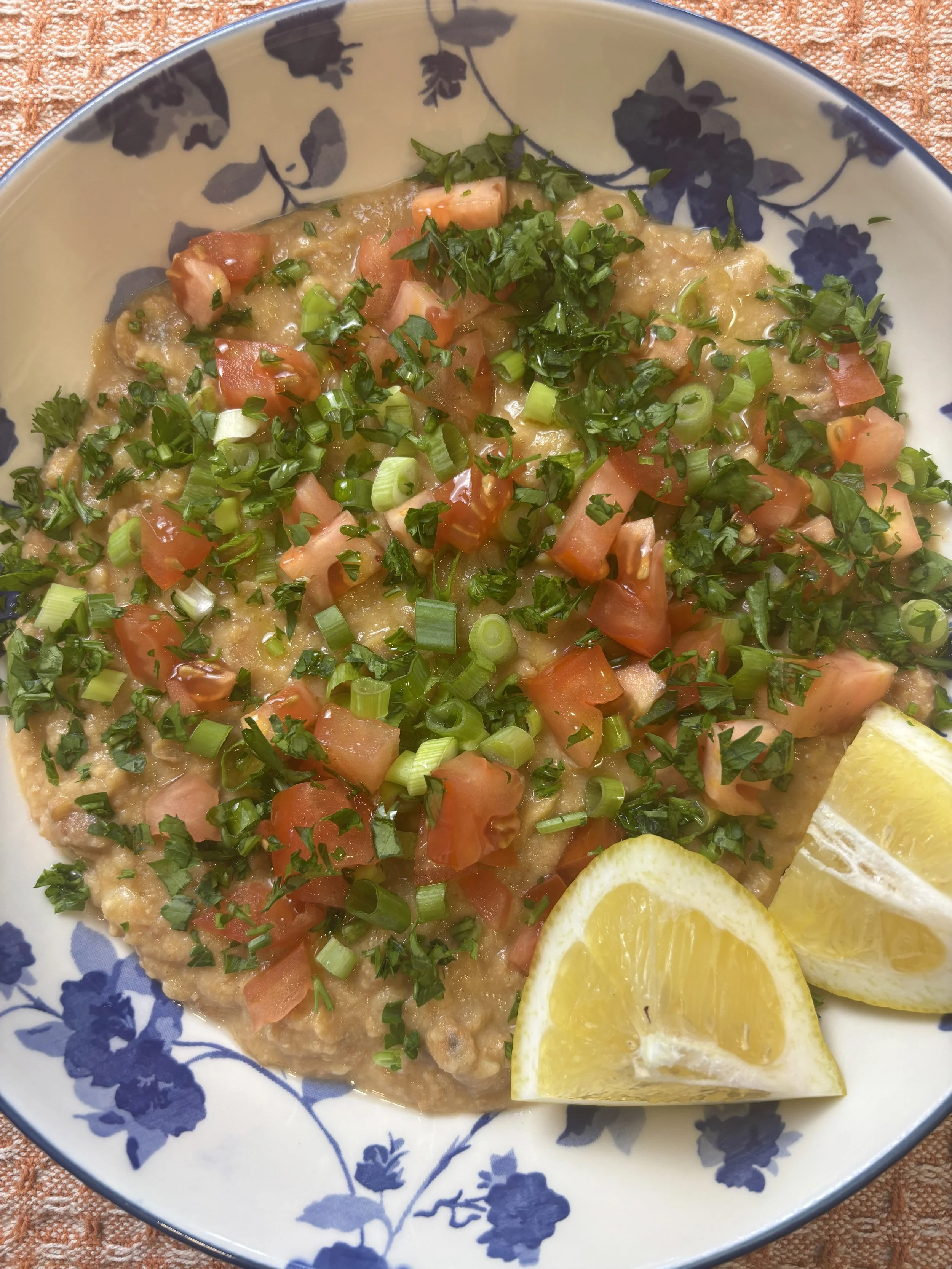
The dish that will always bring me back to that feeling is Ful medames.
It’s simple, comforting, and deeply personal to me—and this is my version of how I like to make it at home.
Ful Medames (Mashed Egyptian Fava Beans with Lemon, Garlic & Tahini)
Ingredients
Base:
2 cans cooked fava beans (or 1½–2 cups dried cooked fava beans)
2–3 tbsp olive oil
3–5 cloves garlic, minced
Juice of 1–2 lemons (go heavy if you like it bright)
2–3 tbsp tahini
1 tsp cumin
Salt, to taste
Optional: pinch of chili flakes or paprika
To finish (your toppings):
Fresh parsley, chopped
Green onions, sliced
Tomatoes, diced
Extra lemon juice
Olive oil drizzle
Instructions
Warm the beans
In a pan over medium heat, add the fava beans with a splash of water and warm them through until soft and steamy.Mash
Lightly mash the beans with a fork or potato masher. Keep it rustic—some texture is good.Build flavour
Add olive oil, minced garlic, cumin, salt, lemon juice, and tahini. Stir well while still warm so everything blends together.Adjust consistency
Add a splash of water if needed to loosen it, or mash more if you prefer it smoother.Taste & balance
This is where you adjust:more lemon if you want brightness
more tahini for creaminess
more garlic for depth
Serve
Spoon into a bowl and make a small swirl on top.
Top it off (your style)
Finish with parsley, green onion, diced tomatoes, extra lemon juice, and a drizzle of olive oil. Eat with a spoon or pita bread!