

A Surprising Way to Keep your Memory Sharp: Bingo
Written by Kelly McKenzie
When folks ask me what I miss most about my late mom, my answer surprises many.
It’s our Saturday morning bingo sessions.
Seriously?
Yes, because while playing bingo Mom reverted to her normal self. Confident, competitive, and considerate.
Frankie, my mother, began developing short term memory issues in 2022. The former Fine Arts prof and Asian antiques dealer feared the worst and it was heartbreaking to witness the normally positive soul suffer moments of anxiety, confusion and depression.
She was 99.
After much consideration, Mom moved into a neighbouring Vancouver long term care facility. We were thrilled to see how quickly she settled in. Distractions in the form of lessons, entertainment and outings were a welcome bonus; ones she happily shared during 7am phone calls.
“Ladderball’s at 10:00, the women’s group at 11:00. Fun with art (I could teach that class) is at 1:00, and a sing-along at 3:00. Do come, it’ll be fun!”
We arrived at a reasonable solution. Living nearby, my sister Wendy would take on the frequent drop-ins while I would report for the Saturday bingo.
For the next two years we followed a strict bingo routine.
“You’re here. Excellent Kel. Let’s go. I need to get my usual seat or I can’t hear the calls. Follow me.” Confident Mom would whip her walker around the corner and into the small activity room overlooking the garden. Bless her. We were always the sole occupants for at least the next 20 minutes.
Once the young volunteer arrived and started setting up, Confident Mom always informed her,“I should like two cards, please. It’s not that I’m greedy, it’s just that I need to keep my brain active.”
This confident version of Mom would be slowly replaced by Competitive Mom as she began pawing through her pile of plastic chips. Each colour would be carefully sorted into groups with white being her particular favorite. From the start of the first game, she studied both cards with the alertness of a Las Vegas blackjack player.
The others tended to be slightly less vigilant. Whenever someone nodded off or missed a call, I’d try and place a token down for them. Competitive Mom didn’t like this. She’d grab my wrist and hiss, “Kelly, do stop. It’s their fault if they missed it.”
Observing her, one could easily assume we were playing for wondrous prizes like cars, trips or cash. But no.The coveted prizes were miniscule chocolate bars the size of Pink Pearl erasers.
We often got in eight games over the allotted hour. In order to spread the wealth around, I allowed myself only one win. However, Competitive Mom had no such compunction. She racked up the wins, averaging 85% per session.
It was during the third or fourth prize giving that Considerate Mom slowly emerged.
“I’ll take Smarties, please. Chocolate doesn’t agree with me, sadly. I store it all in “The Magic Bag” for my great grandchildren. They love Smarties.”
Usually halfway through the session, she’d pry her eyes from the cards and lean in.
“Look, poor Evelyn doesn't have any chocolate. Grab her card, Kel.”
The room would fall silent as Considerate Mom would smile and slowly run her fingers around the edges and surfaces of that card. We’d hold our breaths with each drop of the bingo ball. And then, boom, nine times out of ten, the owner of the newly blessed card would holler, “BINGO!”
Mom would smile, and say, “Bingo’s such a game of chance, isn’t it? I do like playing. It’s left me feeling quite like my old self.”
Bingo.
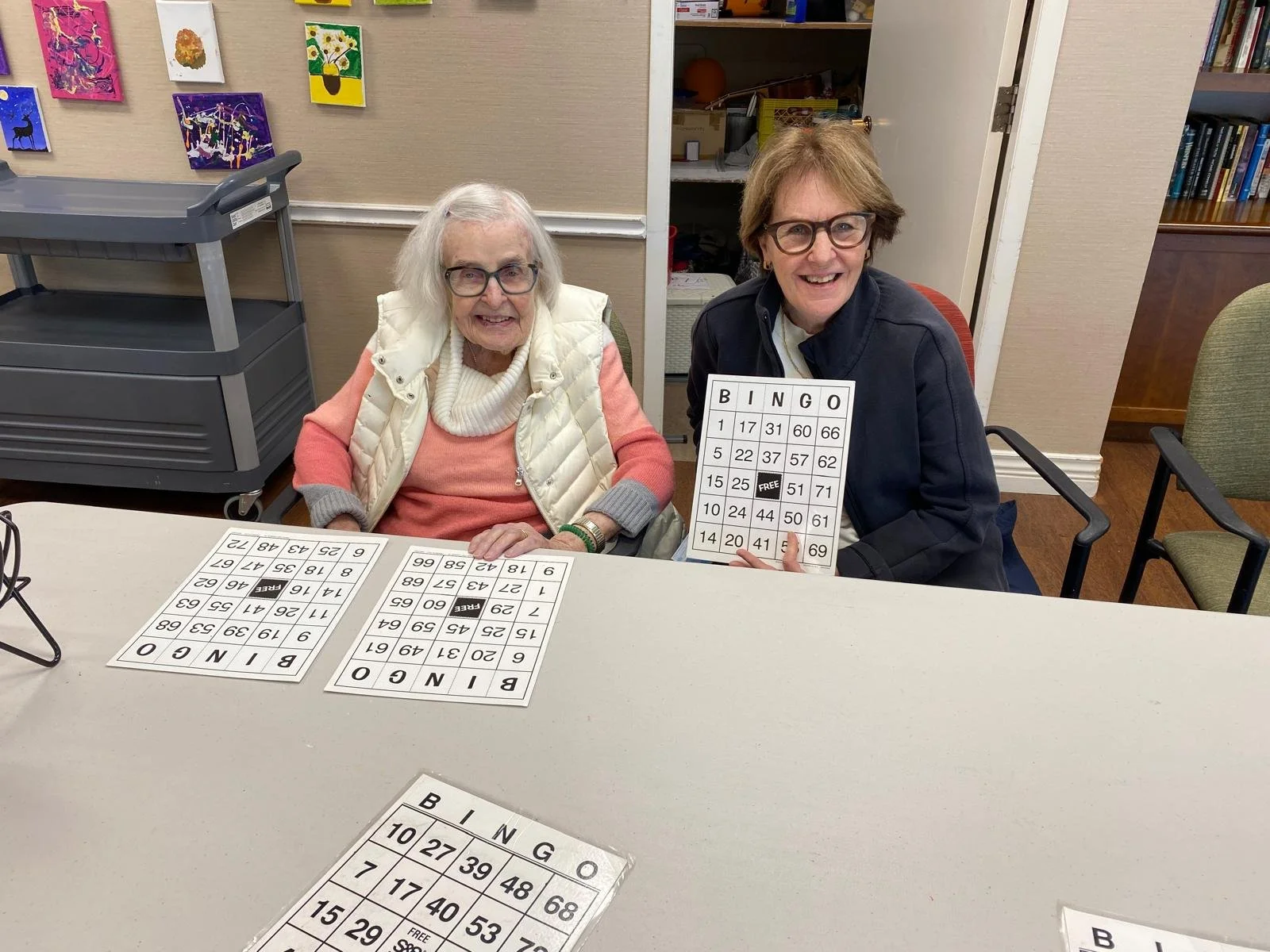
According to the Alzheimer Society almost 40% of Canadians over the age of 65 experience some form of memory loss. Known as age-associated memory impairment when no underlying medical condition can be attributed to the loss, it is part of the natural process of aging. For most people, memory generally remains strong as they get older, and doesn't decline quickly or significantly.
However, when memory loss begins to affect one’s daily life, making completion of familiar tasks or learning new things difficult, and close friends and family are noticing changes in one’s abilities, it could signal the early onset of dementia.
It’s estimated that over 771, 900 people were living with dementia in Canada as of January 1, 2025, according to the Alzheimer Society of Canada. They predict the number could increase to nearly 1 million by 2030 and to 1.7 million by 2050.
The Society recommends the following 12 actions to help reduce the risk of developing dementia: daily physical activity, protecting heart health, staying socially active, managing medical conditions, challenging your thinking, sleeping well, treating depression, avoiding excessive alcohol, maintaining hearing, finding meaning in life, avoiding head injury, and adopting healthy behaviours.
Further information on memory loss and dementia can be found at https://alzheimer.ca