

What Cancer Taught Me About Breaking Family Cycles
Written by Penny Greening
After discovering a tumour during her daughter’s bedtime routine, Penny Greening was forced to confront long-standing patterns of self-criticism, emotional suppression, and inherited shame. In this powerful reflection on parenting through illness, Penny explores how presence, emotional honesty, and self-compassion can break family cycles, and why confident children aren’t raised through detachment, but through feeling deeply seen and supported.
When my daughter was in Grade 5, she decided to make her year-end science project about breast cancer. She completed the work during class time, so my husband and I didn’t see it until Parent Night when we walked around the classroom together, exploring every child’s project.
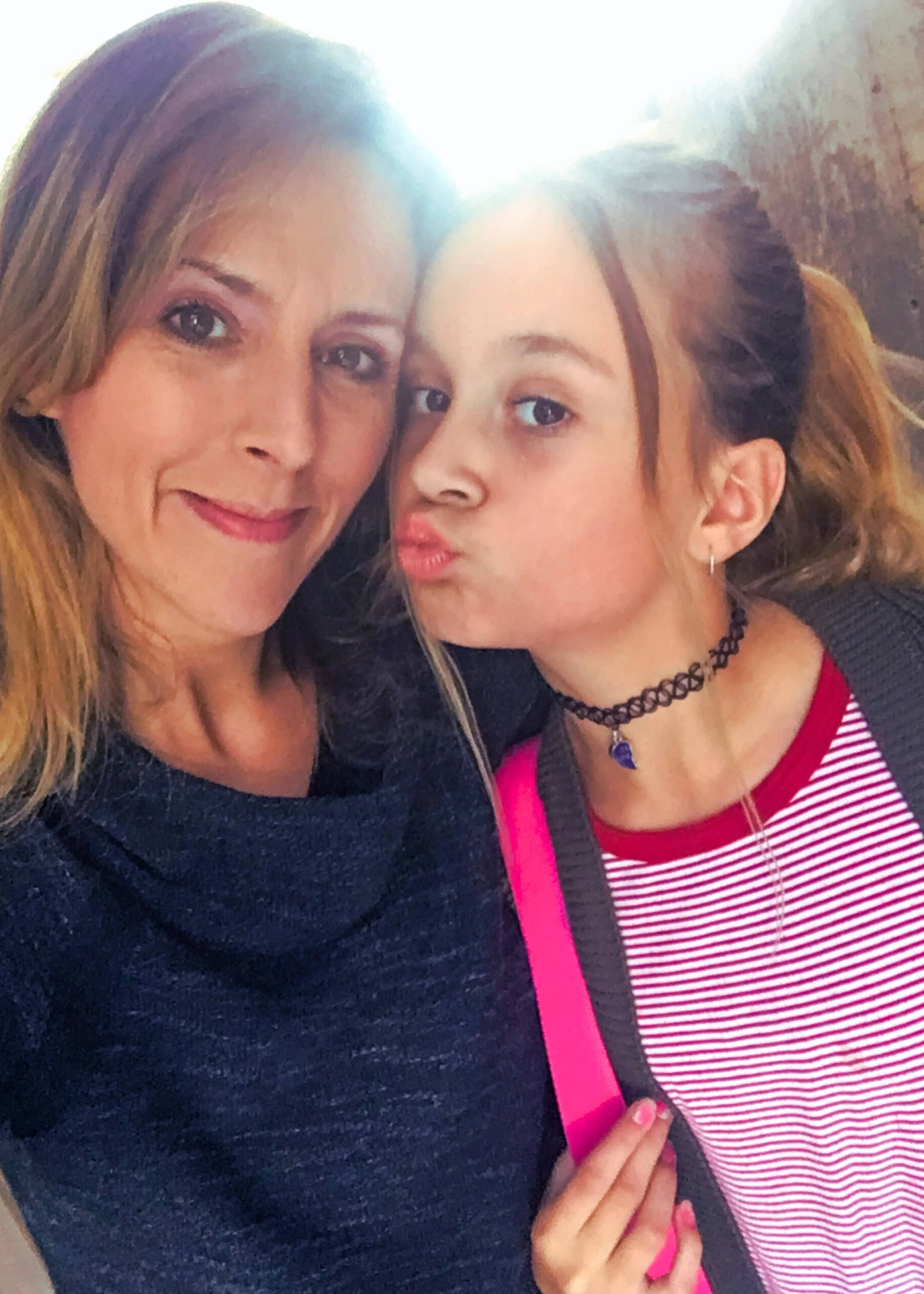
Earlier that day, she explained to her teacher why she chose breast cancer at ten years old: she wanted to better understand what her mother, and our little family of three, had lived through. A year earlier, at 42, I felt the blueberry-sized lump that would later be diagnosed as Invasive Ductal Carcinoma. I only found it thanks to her non-negotiable (and sometimes dramatic) bedtime routine.
The rituals our children insist on can become the moments that teach us the most.
Her bedtime ritual was never just about sleep. For thirteen years, my daughter needed me to help her settle at night. While my husband wanted to help, I was her primary source of comfort most evenings. Some nights it was frustrating. Most nights, it was the connection I needed after long days at work. I was assured by a small group of supporters that the ritual would eventually end. (And it did, as soon as she started high school. Cold turkey.)
But one night when she was nine, lying beside her in the cuddly spoon position she needed to feel secure enough to fall asleep, I absent-mindedly checked my left breast. I felt something unfamiliar. My previous family doctor warned me, before she retired, that painless lumps are often the ones to pay attention to. (And I should add, I was terribly inconsistent with breast self-exams. They’re meant to be done monthly, not annually!)
That night, I found the tiny tumour that changed our lives. What followed wasn’t just a shift in how I cared for my body, but in how I cared for my mind.
Breaking cycles requires awareness, repair, and curiosity.
Receiving a cancer diagnosis while parenting a school-aged child is disorienting. You’re managing your own fear while knowing your child is watching how you move through uncertainty. As an empath, I felt everything: my anxiety, my husband’s fear, my daughter’s awareness of how I spoke about myself, and the emotional residue of how I handled stress before the diagnosis.
Before cancer, I tried to fake confidence at work while quietly battling self-deprecation. Cancer slowed me down enough to notice inherited patterns: self-doubt, fear of conflict, emotional over-sensitivity, and the instinct to override my inner wisdom to keep the peace.
Cancer taught me self-compassion, which made me a better parent.
Children learn far more from how parents are than from what parents say. Vocal tone, volume, and emotional presence shape a child’s inner world long before any lesson we intend to teach. I wanted to raise a confident daughter, but first I had to stop modelling self-criticism. I had to become intentional about what I was demonstrating, including the belief that a body is something you live in, not something you’re meant to ‘fix’ to fit inside a social construct.
Big feelings are not failures.
I had to unlearn old patterns of thought and name my emotional pain honestly, even when it was uncomfortable. Instead of rushing to fix hard emotions, I practiced acknowledging them. Instead of masking uncertainty with forced optimism, we allowed tough questions to exist as a couple, and often worked through them as a family.
Once our daughter reached high school, my husband and I learned how to become quiet anchors. We didn’t panic at discomfort. We stayed present. Home became a place where failed attempts weren’t catastrophes, but opportunities to grow.
The most supportive thing a parent can do is stay present without trying to fix everything.
This approach required confronting shame. I worked especially hard to avoid passing on the body image shame I inherited to our daughter. I shifted how I spoke about bodies and food, choosing more neutral language that framed physical change as a natural occurrence vs. a moral failing. Over time, I learned to live more of the lesson I wanted to teach: that we are ‘enough’ as we are. I decided that asking “How can I contribute?” matters far more than asking “What will ‘they’ think of me?”. Because our time on earth is truly too short to GAF (‘give a f*ck’, as my teen later taught me) what others will think. We have more important values to live than social climbing, addicted to the reward-mechanisms driven by consumerism and FOMO.
Children don’t need perfect parents. They need reflective ones.
Before cancer, emotional self-care felt indulgent. After recovery, it became part of our family health plan. Emotional awareness became something we practiced together, and over time I watched my daughter use this practice with her own friends. By Grade 9, she began exploring how emotional awareness worked for her at her part-time jobs, navigating the demands of managers and needs of her coworkers. And once she shifted to working in the restaurant industry by Grade 12, I watched her navigate the type of world that often asks young women to shrink in order to be valued. She did no such thing. She became a team favourite for her strong work ethic, her boldness, and her sense of compassion.
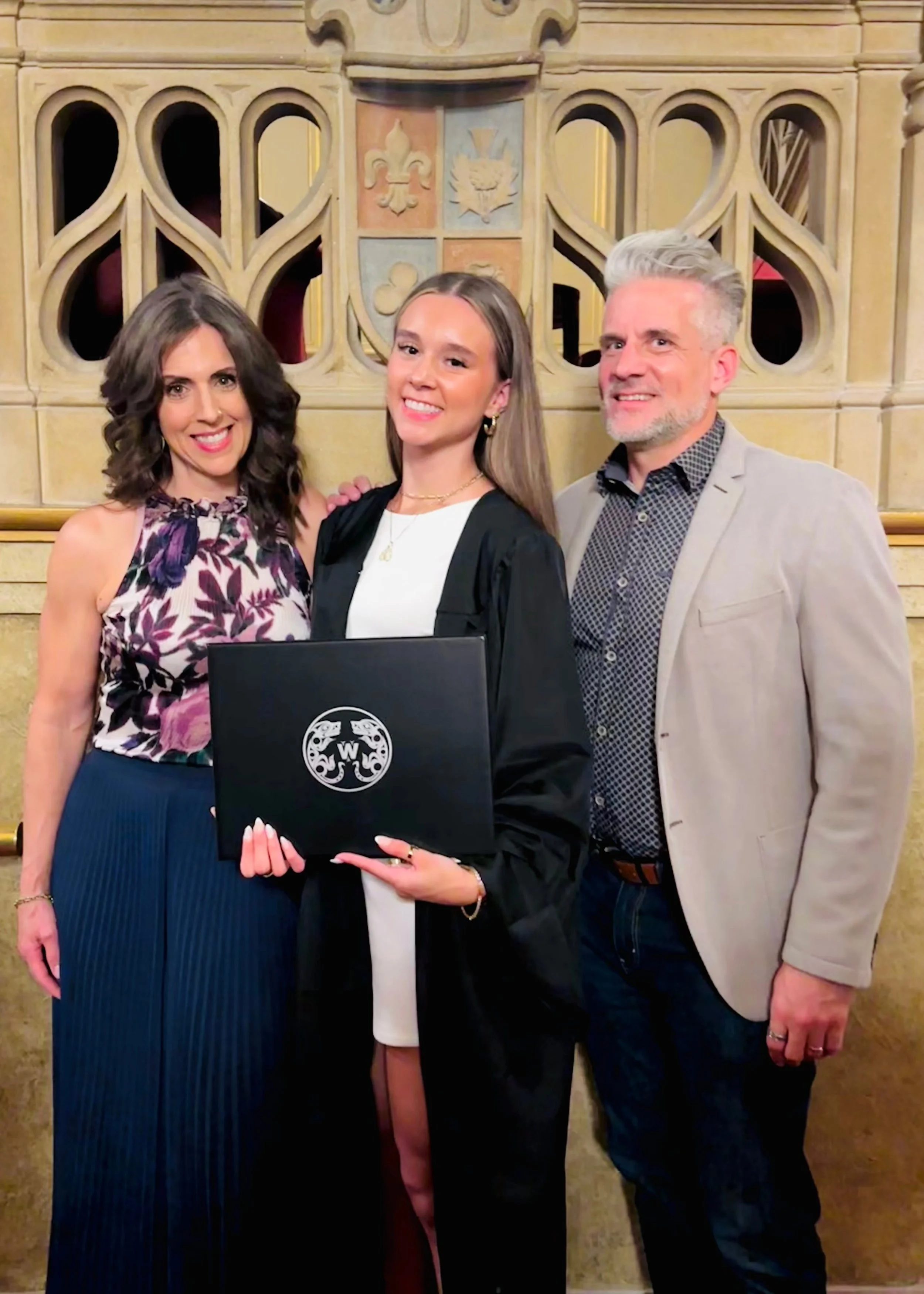
The only thing I ever wanted for my little girl was to find her sense of confidence early. Today, she’s nearly 19, a first-year university student and part-time restaurant employee, and she is fiercely confident. Thanks to the greatest experiment of my life gone right (parenting), I can prove that confidence does not come from early detachment, it comes from feeling securely seen and heard in childhood. When children and teens feel securely parented they can become independent adults who learn to trust their own inner wisdom.
Cancer forced me to stop faking it to make it, and to start believing in my empathy superpowers. I hope you never have to walk through the doors of any cancer facility, especially while parenting young children. But if you do, the BC Cancer Agency, in Vancouver British Columbia, is one of the best places in Canada for treatment. Their care allowed me to remain calm, present, and still very much a parent while being a patient. Cancer didn’t make me a perfect parent, but it brought me face-to-face with my mortality sooner than expected. And if cancer left me with one enduring lesson, it’s this: pay attention to your inner wisdom and start new cycles, for good.
About The Author
Penny Greening is the founder of Reframe Voices, a BC nonprofit changing how families talk about food, body image, and mental health, with openness and compassion. Drawing on her own lived experience with eating disorders since childhood and, having lost a family member to anorexia and bulimia, Penny writes frequently about early prevention, body-based bullying, and the power of stigma-free ‘food talk’ at home and around school. Her work blends personal insight with research-informed practice to help families notice signs in children and youth sooner, speak more gently, and seek help earlier.
Follow @ReframeVoices on Instagram, TikTok, YouTube or LinkedIn.