

What Bees Have Taught Me About Food, Family, and the Future
Written by Angela Ysseldyk
In this reflective piece, Dutchman’s Gold Co-Owner and Bee Advocate, Angela Ysseldyk, shares insights shaped by a lifetime around bees on her family’s Ontario bee farm. Through personal experience and a holistic lens, she explores how pollinators are responsible for much of the food we eat, from the earliest stages of planting right through to what ends up on our plates.
Weaving together family moments, seasonal foods, and the challenges facing pollinators today, she will explain our shared connection between land, food systems, and everyday choices. She hopes this article serves as a reminder of how much begins long before we ever notice it, and why those small, often overlooked relationships matter more than we think.
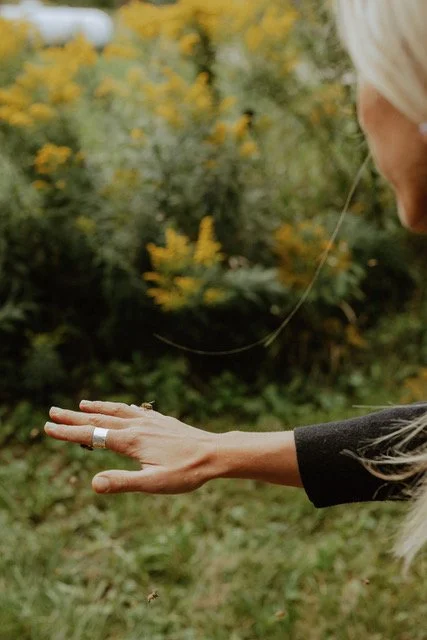
Long before I understood the word “ecosystem,” I was already watching one unfold around bees.
I grew up on a bee farm in Ontario, working alongside my father, a beekeeper and the founder of our family business. Growing up around bees, I always understood how connected we are to them. I was lucky to be born into a deep respect and understanding for the role they play in our world.
When you take a closer look at the bees, you quickly realize they’re not just producing honey, they’re part of something much bigger. They’re a thread in the entire ecosystem. I am lucky to have parents who valued that connection and taught this to me early on.
One of the most important things I’ve learned is that pollinator health doesn’t begin with bees, it begins with what they have access to. An abundant, diverse, pesticide-free food supply is one of the most important ways we can support pollinators, and it all starts with a seed.
The flowers we plant today shape what comes next. That idea has always stayed with me, and it’s part of why we’ve worked with organizations like Sierra Club Canada through our Let’s Plant™ campaign, with a goal of planting millions of seeds to support pollinators and biodiversity. Even as a small company, we believe small actions can add up. But we can’t do it alone.
Honey bees, (along with other wild pollinators), contribute to roughly one-third of the food we eat. Our very food supply here in Canada and the world depends on them. So much of what shows up in summer, strawberries, apples, cucumbers, squash, canola, is there because of their work, even if it’s not always something we stop to think about.
At the same time, pollinators are facing multiple pressures including habitat loss, climate change and unpredictable weather patterns, parasites like varroa mites, and reduced floral diversity. These pressures overlap, and so do the ways we respond to them through farming practices and planting choices.
One of the things I’ve always found interesting about honey is how specific it is to place and timing. The flowers that grow in a given season end up reflected in its flavour, colour, and aroma. Canadian honey in particular carries those differences clearly, region, season, floral source, all of it comes through. You can taste where it comes from. As a holistic nutritionist, I’m also drawn to real, whole foods, and honey and bee pollen are good examples of what the hive can offer when it’s thriving. They reflect the conditions they come from in a very direct way, and help us remember that when we look after the bees, they look after us.
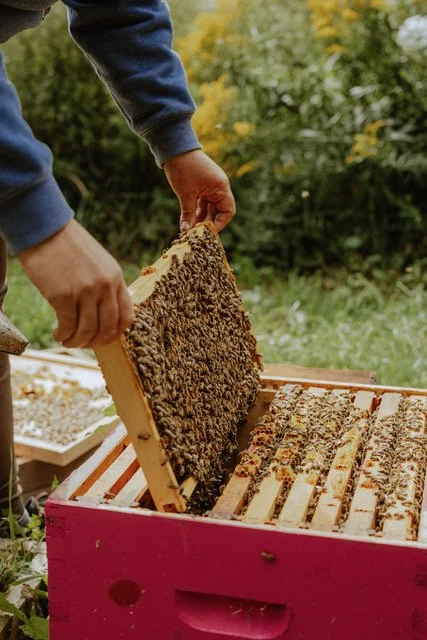
World Bee Day on May 20 and Pollinator Month in June are a reminder to pay attention to that relationship again. For me, some of the most meaningful moments are the simplest, walking with my kids, now teenagers, and pointing out bees on flowers, or watching them connect what they see outside to what ends up on their plate. Children often notice these things before we do.
We don’t live in a vacuum—what happens here is connected globally, but supporting Canadian beekeepers helps protect our local food systems and ecosystems. We need to take a long-term approach. This isn’t just about today, it’s about protecting biodiversity and food systems over time. For me, that’s what Let’s Plant is really about, making choices now that carry forward, even in small ways, into the future.
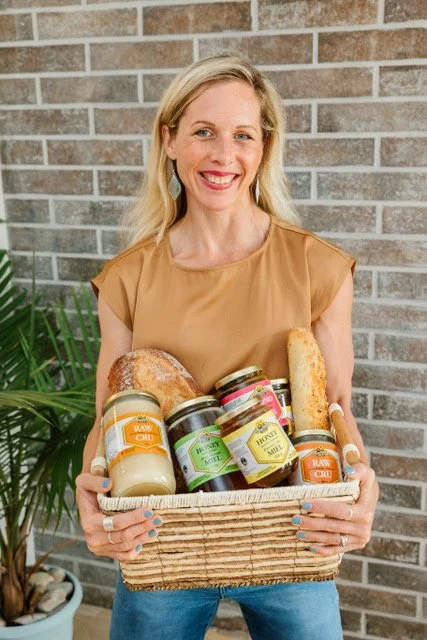
Angela Ysseldyk, is the second-generation co-owner of Dutchman’s Gold, a Canadian family brand known for its honey, maple syrup, and beehive-based wellness products. A Certified Nutritional Practitioner, lifelong beekeeper’s daughter, and mom, she combines her background in health with her passion for pollinators to advocate for clean, sustainable living and pollinator protection.
Visit www.dutchmansgold.com to shop and learn more.